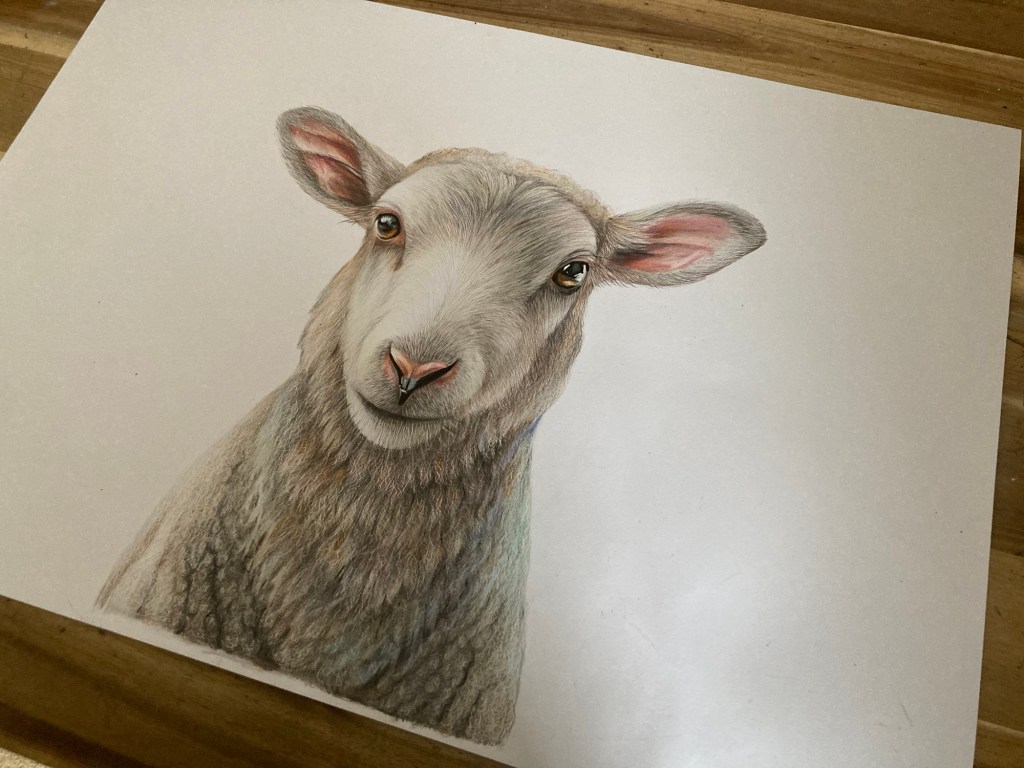
I think the Passover miracle is one of God’s favourites. He made Passover month the beginning of the whole year (Exodus 12:2). He even defines Himself by the event from Exodus onwards; “I am The Lord your God, who brought you out of Egypt, out of the land of slavery”.
In Luke 22:15 Jesus says to His disciples, “with fervent desire, I have desired to eat this Passover with you before I suffer”. Jesus not only celebrated it, He was eager to do so because He know this ancient celebration was all about Him.
It wasn’t just another religious ritual; it was the moment He would reveal Himself as the fulfilment of everything the Passover represented.
Colossians 2:16-17 tells us that the festivals, new moons and sabbaths are a “shadow of the things to come, but the substance is Christ”.
When God instituted Passover in Exodus 12:23 it was made clear that when He sees the blood on the lintel and two doorposts The Lord would Passover the door and not allow the destroyer to enter. It was never about ethnicity. It’s about the blood. Not the blood that runs through our veins but the blood we sprinkle on the door posts of our hearts, so to speak.
The messiah is revealed in each and every symbol of the Passover Seder and take feast perfectly covers the time of His death and resurrection; distinguishing Him from any false prophet, false teacher or false messiah.
Revelation 19:10 makes a bold statement regarding the relationship between prophecy and Jesus Christ: “The testimony of Jesus is the spirit of prophecy”. One third of the Bible is prophecy at least a half already being fulfilled precisely as God had declared. Because of God’s faithfulness in fulfilling these prophecies, we can be assured that He will fulfil the rest of the prophecies in scripture without fault.
“I am God and there is no other; I am God there is none like me, declaring the end from the beginning and from ancient times things not yet done” (Isaiah 46:9-10).
These feasts are prophecies in action that only our true messiah could fulfil to the letter.
Passover itself is commanded in scripture but specific rituals and traditions have been developed over time in Jewish practice. During the special evening of Passover Jewish families would eat specific symbolic food, have four cups of wine and tell the story of the Exodus.
For centuries Jewish families would sacrifice and innocent, unblemished lamb. According to Exodus 12:46, not one bone of the Passover lamb was to be broken. This is presented by the shank-bone on the Seder which was perfectly fulfilled by Jesus; in John 19:33 it tells us “ when they came to Jesus and saw that He was already dead, they did not break His legs”.
Every Passover Seder has three matzah breads that are placed together representing The Father, Son and Holy Spirit. This unleavened bread (representing the sinless life of Jesus) has stripes and piercings just how Isaiah described Jesus approximately 700 years before His birth on Isaiah 53:5 (“He was pierced for our transgressions, He was crushed for our iniquities, the chastisement for our peace was upon Him, and by His stripes we are healed”.
The middle matzah (representing Jesus) is broken and half is hidden/set aside which is called the “afikoman” (meaning “that which comes later”) and is to be eaten at the end of the meal as a desert/reward.
The matzah perfectly pictured the Messiah who was pierced, broken for us, hidden, buried and resurrected. Still to this day Jesus is hidden from the Jewish nation, but a day is coming when all of Israel will recognise Him and be saved (“A partial hardening has come upon Israel in part, until the fullness of the Gentiles has come in” Romans 11:25).
The bitter herbs remind us of the suffering of our ancestors in Egypt, but also remind us of the bitter cup Jesus drank from in Gethsemane (Matthew 26:38- “my soul is exceedingly sorrowful even to death”).
When Jesus shed blood for the first time- it wasn’t upon the cross it was at that garden where Luke 22:44 tells us: “His sweat became like great drops of blood falling down to the ground”; the first Adam sinned in the garden bringing death, the last Adam suffered in a garden bringing life. The four cups of wine each represents a promise from Exodus 6-7. God would bring Israel out, rescue them, redeem them and take them as His people. The first represented sanctification, the second judgment, the third redemption and the forth praise.
During the last supper something incredible happened; Jesus took the first cup as usual but then did something unexpected- skipping the second cup. This was because He was about to go to Gethsemane and drink that cup alone for us. Instead, after supper, He took the third cup of redemption saying “this is the new covenant in my blood which is shed for you” (Luke 22:20).
What grace! He took the judgment so that we could have redemption.
Approximately 2000 before these events, the account of Genesis 22 takes place in the very same location. The story begins with a strange command from God to Abraham, instructing him to offer his “son of promise,” Isaac, as a burnt offering. Early the next morning, Abraham packs wood and a knife, and he and Isaac travel to Moriah, the place God had specified. As they near the site, Isaac questions Abraham concerning the intended offering: “Where is the lamb?” With great faith Abraham responds, “God himself will provide the lamb for the burnt offering, my son” (Genesis 22:1-8). The New Testament tells us that Abraham believed God would raise Isaac from the dead (Hebrews 11:19).
Upon reaching the place God had chosen, Abraham demonstrates his faith and obedience by building an altar, binding Isaac, and placing him on the wood. Before Abraham can finish the offering, the Angel of the Lord calls to him from heaven, and Isaac’s life is spared. Then, “Abraham looked up and there in a thicket he saw a ram caught by its horns. He went over and took the ram and sacrificed it as a burnt offering instead of his son” (Genesis 22:13). Abraham names the place “Jehovah-Jireh” because of God’s gracious provision of a substitute for Isaac.
Immediately afterwards, God reconfirms His covenant with Abraham (v 17-18). Centuries later, King Solomon would build the temple in the same location (2 Chronicles 3:1).
The account of Abraham on Mt. Moriah is more than just a dramatic event of faith and obedience. It is a presentation of the Lord’s eternal grace, continual provision, and all-encompassing wisdom.
Jehovah-Jireh is not “The LORD Did Provide,” but “The LORD Will Provide.” In the account of Genesis 22, The Lord didn’t provide a lamb, but a ram. 2000 years later God DID provide the lamb. Abraham’s faith-filled statement that “God himself will provide the lamb” was fulfilled in Jesus “Look, the Lamb of God, who takes away the sin of the world!” (John 1:29).
Jehovah-Jireh provided a sacrifice to save Isaac, and that action was a foreshadowing of the provision of His Son for the salvation of the whole world. Jesus died as our Passover lamb precisely on Passover day. He was buried during the feast of unleavened bread and He was resurrected from the dead on the feast of First-fruits.
No human could possibly orchestrate this divine timing, only the true Messiah who established the feasts with Moses 1500 years earlier. These feasts are prophecies in action that only The Lord Himself could fulfil to the letter.
During the Seder Jewish families sing “Dayenu”, meaning “it would have been good enough”. We recall God’s blessings- “if only He would have just brought us out of Egypt” deyenu (it would
have been good enough), but God gave more…As believers we can say “if you had only forgiven our sins deyenu (it would have been good enough) but you also made us children of God and co-heirs with Christ.
The mystery of the Messiah, hidden for ages is now revealed. He is the substance behind every shadow. God is not after rituals, He is after hearts that recognise His son- knowing that only in Him can we pass over from death to life. Through Him alone we have atonement through faith. He is the only way, the truth and the life (John 14:6) and the source of salvation (Acts4:12). Through faith in Jesus any person can have everlasting life.
Revelation 3:20 says “Here I am! I stand at the door and knock. If anyone hears my voice and opens the door, I will come in and eat with that person and they with me”.
Will you open the door to Him?
 Brooke Hunter | Art Blog